
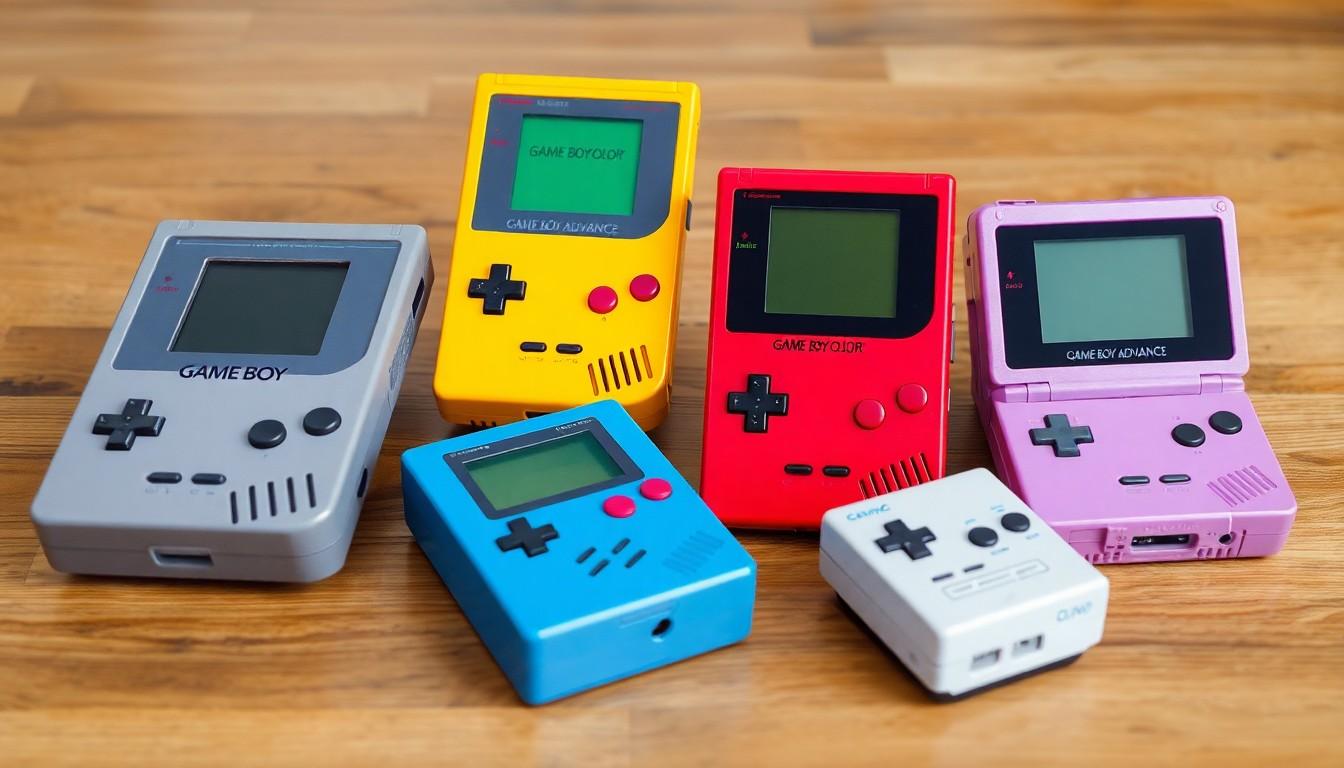

In the world of handheld gaming, few devices have made as big a splash as the Game Boy. This tiny powerhouse revolutionized how players experienced gaming on the go, turning mundane bus rides into epic adventures. From its chunky design to its iconic green screen, the Game Boy captured hearts and thumbs alike, proving that great things really do come in small packages.
But wait—there’s more! With a variety of models that evolved over the years, each Game Boy brought its own unique charm and quirks to the table. Whether it’s the classic Game Boy, the sleek Game Boy Advance, or the colorful Game Boy Color, each model has a story that’ll make any retro gamer chuckle. So buckle up as we dive into the delightful world of Game Boy models, exploring the nostalgia and innovation that made them legendary.
Overview of Game Boy Models
The Game Boy series represents a landmark in handheld gaming, encompassing various models that each brought unique features. Released in 1989, the original Game Boy introduced a monochrome screen and a compact design, allowing for portable gaming on the go. This model set the foundation for future iterations.
The Game Boy Color followed in 1998, enhancing the experience with a color screen and backward compatibility for original Game Boy games. It appealed to a broader audience, thanks to its vibrant graphics and a wide library of titles.
In 2001, the Game Boy Advance arrived, offering significant upgrades like a wider screen, improved graphics, and a new horizontal design. Players enjoyed better performance and a robust selection of game genres, solidifying its popularity among gamers.
After that, the Game Boy Advance SP emerged in 2003, featuring a clamshell design and a front-lit screen. This model made gaming even more accessible in low-light conditions, with added portability.
The final model, the Game Boy Micro, launched in 2005, showcased a sleek and compact design. While it maintained compatibility with Game Boy Advance titles, it emphasized aesthetics and portability over features.
Each Game Boy model contributed to the evolution of handheld gaming. These devices not only attracted dedicated gamers but also introduced many newcomers to the world of video games. Their legacy continues to influence modern gaming trends and devices today.
Original Game Boy

The Original Game Boy marked the start of a gaming revolution in 1989. Its compact design and simplicity appealed to gamers of all ages.
Design and Features
Distinctive in appearance, the Original Game Boy featured a gray casing and a 2.6-inch monochrome screen. It utilized a D-pad, buttons for A and B, and select and start buttons for navigation. Weighing approximately 220 grams, it was portable enough for on-the-go gaming. Additionally, four AA batteries powered the device, allowing for around 15 hours of playtime. Users could connect multiple units for multiplayer experiences through a link cable. This groundbreaking design set a foundation for future handheld gaming consoles.
Game Library
An impressive library characterized the Original Game Boy, featuring over 1,000 titles. Iconic games included “Tetris,” “Super Mario Land,” and “The Legend of Zelda: Link’s Awakening.” Tetris, in particular, became synonymous with the console, driving its sales. Genres ranged from platformers to puzzle games, ensuring there was something for everyone. The backward compatibility with Game Boy Color titles also expanded its library further. By catering to diverse interests, the Original Game Boy solidified its place in gaming history.
Game Boy Color
The Game Boy Color revolutionized handheld gaming with its introduction in 1998. Featuring a wide range of colors, this model appealed to a diverse audience and expanded gameplay experiences.
Enhanced Graphics and Color Display
A vibrant color display marked a significant upgrade over the original monochrome screen. Players enjoyed a more immersive gaming experience thanks to the bright, vivid graphics. The Game Boy Color featured a 2.3-inch screen that supported over 56 colors at once, enhancing visual richness across various games. Enhanced graphics captured attention, offering clearer character designs and detailed environments. Gamers appreciated the improved palette, which brought their favorite titles to life in a way that resonated more with players.
Notable Titles
Several iconic games defined the Game Boy Color’s library. Notable titles include “Pokémon Gold and Silver,” which introduced players to new regions, Pokémon, and gameplay mechanics. “The Legend of Zelda: Oracle of Seasons” and “Oracle of Ages” allowed players to explore unique worlds with puzzle-solving adventures. “GBC” was home to memorable titles like “Tetris DX,” improving upon the classic while introducing new modes for competitive play. This diverse selection solidified the Game Boy Color’s reputation as a vital player in handheld gaming history.
Game Boy Advance
The Game Boy Advance marked a leap forward in handheld gaming technology, debuting in 2001. Players welcomed its sleek design and enhanced features, which boosted the overall gaming experience.
Technological Advancements
Improvements defined the Game Boy Advance. A 2.9-inch screen offered vibrant graphics and supported 32,000 colors. Developers could create more detailed game worlds due to advanced graphics capabilities. The 32-bit processor elevated performance, resulting in smoother gameplay compared to earlier models. In addition, the inclusion of stereo sound enriched the audio experience, captivating players. Gamers enjoyed a library featuring notable titles like “Castlevania: Aria of Sorrow” and “Metroid Fusion,” showcasing the system’s potential. As a result, the Game Boy Advance solidified its place in the lineage of portable gaming.
Backward Compatibility
Backward compatibility enhanced the Game Boy Advance’s appeal significantly. Players could enjoy original Game Boy and Game Boy Color titles on this device. The feature facilitated a seamless transition for gamers, as they did not need to abandon their favorite classics. This compatibility meant an extensive library of over 1,000 titles became accessible. Enthusiasts appreciated the convenience of playing beloved games in a more advanced format. Features like this established the Game Boy Advance as a versatile choice for handheld gaming, attracting both veterans and newcomers.
Game Boy Micro
The Game Boy Micro, released in 2005, is a standout model known for its compact design and portability. Its size measures just 4 inches long, making it incredibly easy to carry.
Compact Design and Portability
Portability defines the Game Boy Micro, with a sleek form fitting comfortably in the palm. Weighing only 2.8 ounces, it allows gamers to take their entertainment anywhere. The 2-inch screen provides a vibrant display, enhancing the gaming experience while remaining pocket-friendly. Features like interchangeable faceplates offer personalization, letting users customize their devices, appealing to a variety of tastes. Game Boy Micro supports Game Boy Advance games, offering a substantial library despite its small size.
Market Reception
Market reception for the Game Boy Micro showcased mixed reviews. Some praised its design, considering it one of the most stylish handheld consoles. Critics pointed out its size limitation, citing the small screen as a drawback for extended gameplay. Sales figures reflected this duality, with initial excitement tapering off as casual gamers favored larger models. By leveraging its unique offerings, the Game Boy Micro maintained a niche following among dedicated gamers who prioritized portability and aesthetics. Despite its challenges, it left a lasting impression on the handheld gaming landscape.
Conclusion
The Game Boy series has left an indelible mark on the world of handheld gaming. Each model brought unique features and innovations that captivated players and set new standards in the industry. From the original Game Boy’s groundbreaking portability to the vibrant graphics of the Game Boy Color and the sleek design of the Game Boy Micro, these devices have shaped gaming experiences for generations.
The legacy of the Game Boy continues to resonate today. Its influence is evident in modern handheld consoles and the ongoing popularity of retro gaming. As technology advances, the spirit of the Game Boy lives on, reminding gamers of the joy and excitement that portable gaming can bring.


