
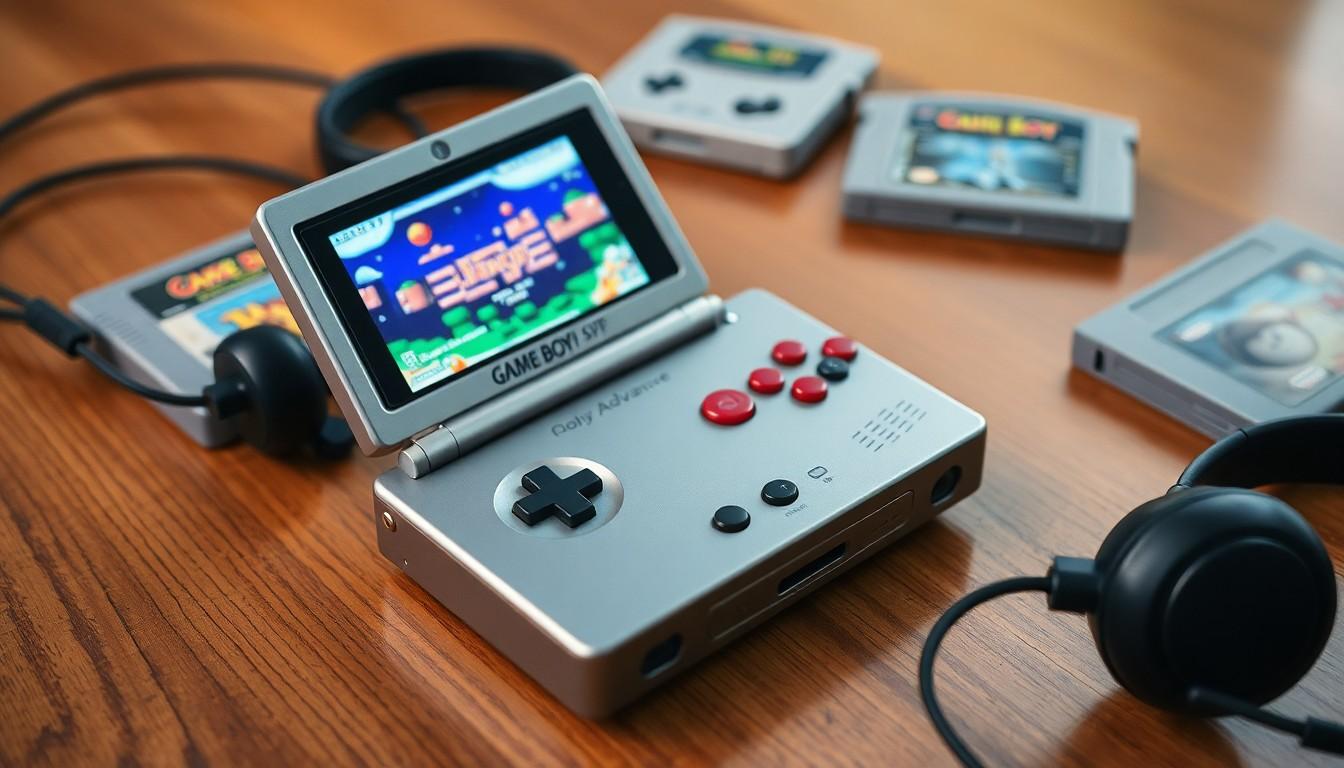

In the world of handheld gaming, few devices have left as big a mark as the Game Boy Advance SP. Released in 2003, this little powerhouse turned gaming on its head with its sleek design and foldable screen. It was like the Swiss Army knife of the gaming world—compact, versatile, and ready to entertain on the go.
Overview of the Game Boy Advance SP
The Game Boy Advance SP debuted on March 23, 2003, revolutionizing portable gaming. This device featured a clamshell design that protected the screen, enhancing durability. It introduced a front-lit display, improving visibility in various lighting conditions. Users appreciated the device’s compact size, making it easy to slip into pockets or bags.
Equipped with a rechargeable battery, the Game Boy Advance SP provided approximately 10 hours of playtime with the light on and up to 18 hours with the light turned off. This extended gaming session appealed to casual and dedicated gamers alike. The SP maintained backward compatibility with Game Boy and Game Boy Color titles, giving players access to an extensive library of games.
With its ergonomic design, the Game Boy Advance SP ensured comfort during long gaming periods. Players could easily access controls without straining their hands. The addition of a headphone jack provided enhanced audio experience, allowing for immersive gameplay.
Inclusively, the Game Boy Advance SP came in various colors, catering to different styles and preferences. Unique editions and collaborations, such as the Zelda and Final Fantasy versions, attracted collectors and fans. The device’s impact on the gaming market remains significant, influencing future handheld consoles.
The Game Boy Advance SP marked an important chapter in the history of handheld gaming, combining innovative features, improved gameplay, and a wide game selection. The device continues to be celebrated by both nostalgic gamers and new players discovering its charm.
Historical Context of the Game Boy Advance SP

The Game Boy Advance SP marked a pivotal moment in handheld gaming history. Released on March 23, 2003, this console built upon its predecessor with innovative features that captivated gamers.
Predecessor: Game Boy Advance
Launched in 2001, the Game Boy Advance set a new standard for portable gaming. It offered a 32-bit processor, a wide color display, and backward compatibility with earlier Game Boy models. Many gamers appreciated the vast library of titles available, but the absence of a front-lit screen presented challenges during low-light conditions. Despite these limitations, the Game Boy Advance established a loyal fan base who eagerly anticipated the advancements in the SP model.
Market Trends in the Early 2000s
The early 2000s saw significant growth in mobile gaming. The introduction of smartphones and a rise in casual gaming shaped consumer expectations. Competition from Sony’s PlayStation Portable introduced new dynamics, pushing Nintendo to innovate. Gamers sought enhanced features like better displays and longer battery life. An increasing demand for portability and convenience highlighted the importance of a compact design. Nintendo recognized this shift and introduced the Game Boy Advance SP, effectively addressing market needs and solidifying its dominance in the handheld sector.
The Game Boy Advance SP Release Date
Nintendo announced the Game Boy Advance SP on January 7, 2003, at the Consumer Electronics Show in Las Vegas. Heightened excitement followed this announcement, showcasing the device’s new features. Gamers eagerly anticipated its release, especially due to its sleek, compact design. The clamshell format included a front-lit screen, addressing a key drawback of the original Game Boy Advance. Speculation about its performance and design generated buzz among gaming communities.
Initial Announcement
The initial announcement of the Game Boy Advance SP emphasized its innovative features. The clamshell design served as a significant upgrade, attracting attention for its portability. Surprisingly, the incorporation of a front-lit display addressed long-standing visibility issues. Prior to this announcement, gamers expressed a strong desire for improvements to enhance gameplay in various lighting conditions. Features like the ergonomic design also played a crucial role in capturing interest among potential buyers.
Official Launch Date
Nintendo officially launched the Game Boy Advance SP on March 23, 2003. This date marked a pivotal moment in portable gaming history. Retailers immediately stocked the device, highlighting its features and attractive colors. Gamers rushed to retailers, eager to experience the advancements it offered. The launch satisfied high consumer demand, reaffirming Nintendo’s position in the handheld market. Sales figures quickly reflected the popularity of the device, leading to a successful introduction to the gaming community.
Features and Specifications
The Game Boy Advance SP features a compact design and innovative specifications that enhance the gaming experience. Its clamshell form allows for easy portability and protects the screen when closed.
Design and Display
The device boasts a sleek, foldable design that fits comfortably in hand. Users enjoy a 2.9-inch front-lit screen, enhancing visibility in various lighting conditions. This display offers vibrant colors, showcasing graphics from a diverse game library. Additionally, the ergonomic design provides comfort for extended gaming sessions, making it a favorite among players seeking convenience and style.
Game Compatibility
Game Boy Advance SP maintains backward compatibility with Game Boy and Game Boy Color titles, granting access to an extensive game library. Players can enjoy not only GBA games but also classic cartridges from earlier models. This feature significantly expands the gaming options, appealing to both nostalgia seekers and new gamers alike. The availability of beloved titles on a modern device plays a crucial role in the SP’s enduring success.
Impact on Gaming Culture
The Game Boy Advance SP significantly transformed gaming culture since its release. Portability became central to gaming experiences, thanks to its clamshell design, which enabled players to easily carry it. Innovations like the front-lit screen directly addressed struggles with visibility, allowing for gaming in various lighting conditions. Gamers embraced its ergonomic design during extended play sessions, leading to increased engagement with handheld gaming.
Backward compatibility with Game Boy and Game Boy Color titles enhanced the device’s appeal. Players accessed a vast library of nostalgic favorites alongside new releases, fostering a blend of old and new gaming experiences. The robust selection of games contributed to a dynamic gaming culture where discussions around game choices thrived.
Cultural trends also shifted as social interactions took place through multiplayer gaming. The inclusion of a headphone jack elevated the audio experience, enhancing immersion in games. This aspect resonated with a community that valued quality sound in their gaming sessions.
The Game Boy Advance SP’s impact extended beyond personal enjoyment. It shaped expectations for future handheld devices, compelling competitors to adapt and innovate. As smartphones began to dominate the market, Nintendo’s design philosophy echoed in subsequent devices, demonstrating the enduring influence of this handheld console in the gaming landscape.
Memorable color variants and special editions captured the attention of collectors, further embedding the Game Boy Advance SP in gaming history. Enthusiasts fondly recall the moments spent with the device, marking it as a significant chapter in the evolution of portable gaming.
Conclusion
The Game Boy Advance SP’s release on March 23, 2003, marked a transformative moment in handheld gaming. Its innovative features and compact design set a new standard that resonated with gamers of all ages. By addressing key issues like visibility and comfort, it not only enhanced the gaming experience but also solidified Nintendo’s dominance in the market.
As the device continues to be celebrated for its nostalgic value and extensive game library, its influence on future handheld consoles remains undeniable. The Game Boy Advance SP is more than just a gaming device; it’s a cherished piece of gaming history that shaped the landscape of portable entertainment.


