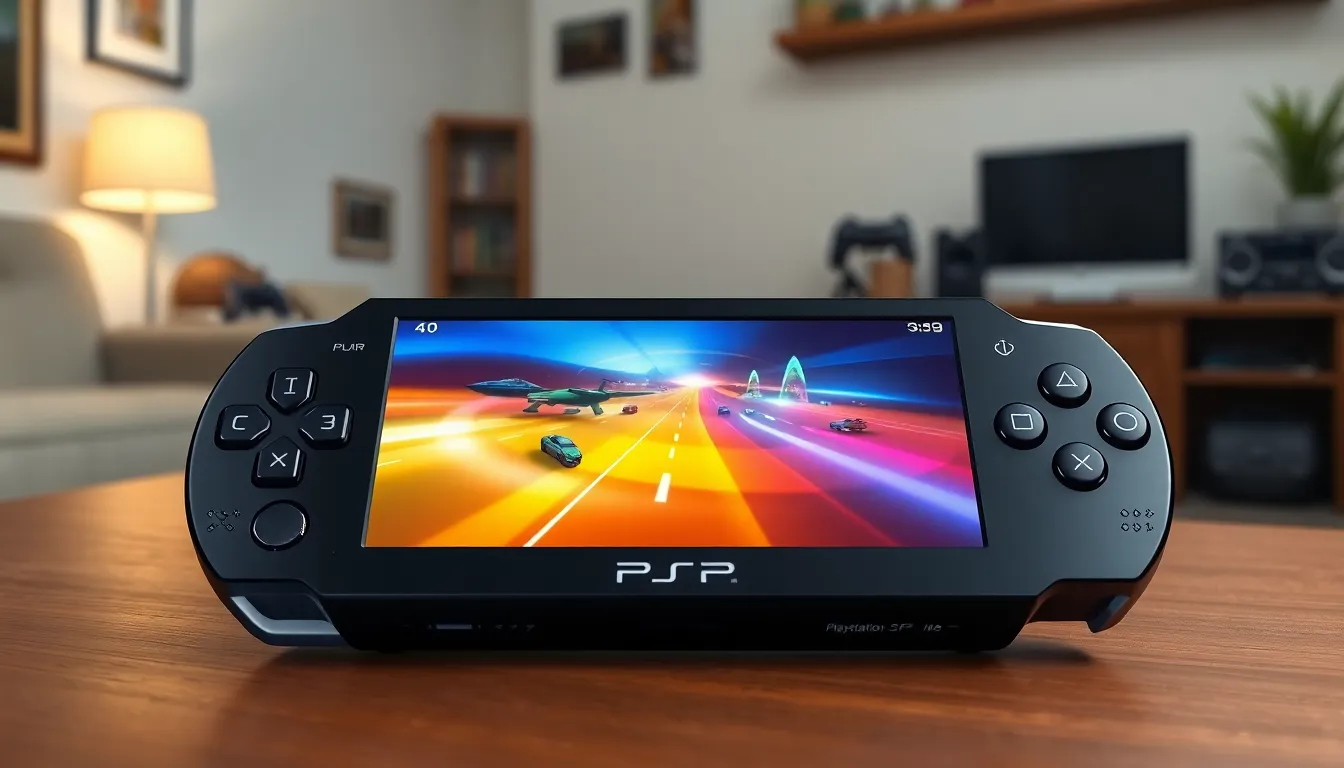

The PlayStation Portable, or PSP, burst onto the gaming scene in 2004 like a caffeinated squirrel, shaking up the handheld market. With its sleek design and impressive graphics, it promised to deliver console-quality gaming on the go. Gamers everywhere wondered: could this little device really replace their beloved home consoles? Spoiler alert: it didn’t completely take over, but it sure made waves.
As it evolved, the PSP became a treasure trove of gaming experiences, from epic RPGs to quirky puzzle games. It introduced a whole generation to the joys of portable gaming, proving that sometimes, the best adventures are just a pocket away. Join the journey through the fascinating history of the PSP, where innovation meets nostalgia, and discover how this little gadget left a big mark on the gaming world.
Table of Contents
ToggleOverview of PSP History
The PlayStation Portable, launched in 2004, revolutionized portable gaming. Sony aimed to provide a console-like experience on a handheld device. Sleek design and impressive graphics distinguished the PSP from its competitors. Gamers enjoyed a diverse library, featuring genres like RPGs and puzzle games.
In 2005, the PSP reached significant sales milestones, selling over 1 million units in Japan within weeks of its release. The introduction of the PSP Go in 2009 showcased Sony’s adaptation to digital gaming trends. Players appreciated the ability to download games directly to the device, reflecting changes in consumer preferences.
Software updates enhanced the PSP’s functionality, adding features like video playback, internet browsing, and online multiplayer capabilities. Community support and homebrew developments further expanded the device’s potential, allowing users to customize their gaming experiences.
Despite its decline in the market after the release of smartphones, the PSP left a significant legacy. It influenced future hand-held devices, paving the way for successors like the PlayStation Vita. The nostalgia for the PSP remains strong among gamers, who remember its role in bringing console-quality gaming on the go.
Overall, the PSP’s history embodies a blend of innovation and cultural impact, marking a milestone in the evolution of portable gaming.
Origins of the PSP
The PlayStation Portable (PSP) emerged from a need for portable gaming that mirrored console experiences. Sony sought to create a device that combined powerful technology with user-friendly features.
Concept Development
Concept development for the PSP began in the early 2000s, driven by the growing demand for handheld gaming. Engineers aimed to deliver high-quality graphics and gameplay that rivaled home consoles. In 2003, Sony revealed the PSP to the public, showcasing its capabilities at the Electronic Entertainment Expo (E3). Attention centered on the device’s potential to deliver a multimedia experience, appealing to a wider audience beyond traditional gamers. Market research indicated a strong interest in portable gaming, prompting Sony to refine the design and functionality.
Early Innovations
Early innovations played a crucial role in the PSP’s design. Equipped with a 4.3-inch widescreen display, it provided vibrant visuals that enhanced gameplay experiences. The introduction of the Universal Media Disc (UMD) allowed players to enjoy games and movies on one medium. Additionally, Wi-Fi capabilities enabled online gaming and content sharing, a novel feature for handheld systems at the time. Sony’s efforts to incorporate multimedia functions positioned the PSP as not just a gaming device but a versatile entertainment solution. These innovations contributed to the PSP’s initial success, attracting gamers and non-gamers alike.
Launch and Initial Reception
The PlayStation Portable (PSP) made its debut on December 12, 2004, in Japan, followed by a North American release on March 24, 2005, and a European launch on September 1, 2005. This staggered release strategy aimed to generate excitement and capitalize on regional gaming markets.
Release Dates
Various release dates marked the PSP’s journey. The Japanese launch took place first, setting the stage for subsequent releases. North America followed just a few months later, allowing players to experience the cutting-edge device. Europe witnessed its rollout shortly after, expanding the PSP’s availability across major gaming territories. Timely releases helped establish a sense of urgency among consumers excited for portable gaming.
Market Impact
The PSP’s initial reception transformed the handheld gaming landscape. Over 1 million units sold in Japan shortly after launch highlighted its strong demand. Compelling graphics and features attracted hardcore gamers, while accessible titles drew in casual players. Competitors took notice, prompting enhancements in their own portable devices. Revenue generated from the PSP contributed significantly to Sony’s gaming division, reinforcing its commitment to portable technology. This impact ultimately shaped the direction of handheld gaming for years to come.
Evolution Through Generations
The evolution of the PlayStation Portable (PSP) showcases significant advancements in handheld gaming. Each iteration brought new features that enhanced user experience.
PSP-1000 to PSP-3000
The PSP-1000 debuted in 2004, featuring a 4.3-inch widescreen display and Universal Media Disc (UMD) support. Following its success, the PSP-2000 arrived in 2007, introducing a slimmer design and improved processing speed. The addition of an external microphone optimized communication for online gaming, making it more social. In 2008, the PSP-3000 emerged, enhancing display quality with a brighter screen and anti-reflective technology. These updates captured players’ interest and solidified the PSP’s role in portable gaming.
PSP Go and Beyond
Launched in 2009, the PSP Go marked a shift towards digital gaming with no UMD support. Its compact design appealed to gamers seeking convenience, while built-in storage allowed for seamless downloading of games. Key software updates offered expanded functionality like built-in video playback and online gaming capabilities. Although the PSP Go did not achieve the same popularity, it set the stage for future innovations in portable gaming, influencing the development of the PlayStation Vita.
PSP’s Influence on Gaming Culture
The PSP played a transformative role in gaming culture, introducing innovative elements that shaped the industry.
Popular Titles and Milestones
Notable titles like God of War: Chains of Olympus, Grand Theft Auto: Vice City Stories, and Monster Hunter Freedom Unite showcased the device’s capabilities. These games not only drew in millions of players but also redefined expectations for portable titles. Milestones, such as the million-unit sales within days of the Japanese launch, underscored the PSP’s impact on gaming. The device served as a platform for unique multiplayer experiences, such as cross-platform play with PlayStation 3. These achievements firmly established the PSP as a pioneering force in handheld gaming.
Legacy in Modern Gaming
Modern gaming still feels the PSP’s influence, evident in the design and features of current handheld devices. Many consoles, like the Nintendo Switch, draw inspiration from the PSP’s emphasis on portable, high-quality experiences. Enhanced digital capabilities, rooted in the PSP’s legacy, set the stage for cloud gaming and digital storefronts. Game developers continue to reference titles that flourished on the PSP, showcasing the enduring appeal of those experiences. Players frequently recall the PSP’s role in popularizing gaming on the go, marking a significant chapter in the evolution of gaming culture.
The PlayStation Portable stands as a landmark achievement in the realm of handheld gaming. Its innovative design and diverse game library reshaped expectations for portable devices. While it faced competition from smartphones and newer consoles, the PSP’s influence remains undeniable.
Gamers continue to celebrate its unique contributions to gaming culture, from iconic titles to groundbreaking features. The nostalgia surrounding the PSP highlights its lasting impact on both players and the industry. As gaming technology evolves, the PSP’s legacy will undoubtedly inspire future innovations in portable gaming.